Irresistible Dakgangjeong: Sweet Crispy Korean Fried Chicken
Last Updated on May 8, 2026 by rodrigorecipez
There’s something undeniably enchanting about the sound of sizzling chicken in hot oil it s the promise of crunch, flavor, and comfort all in one bite. When I first experimented with Dakgangjeong, the lively flavors of this Korean delicacy transported me to bustling streets filled with the aroma of spices and laughter. This recipe, which highlights the sweet and spicy essence of crispy fried chicken coated in a glossy glaze, is perfect for those moments when you’re craving something special without spending hours in the kitchen.
Whether it’s a casual gathering with friends or simply a rewarding weeknight treat, Dakgangjeong delivers both ease and satisfaction. With boneless chicken thighs as the centerpiece, you can quickly whip up this crowd-pleaser, making it a versatile addition to any meal. Join me as we dive into this delightful recipe that promises joy with every crispy bite!
Why is Dakgangjeong a Must-Try Dish?
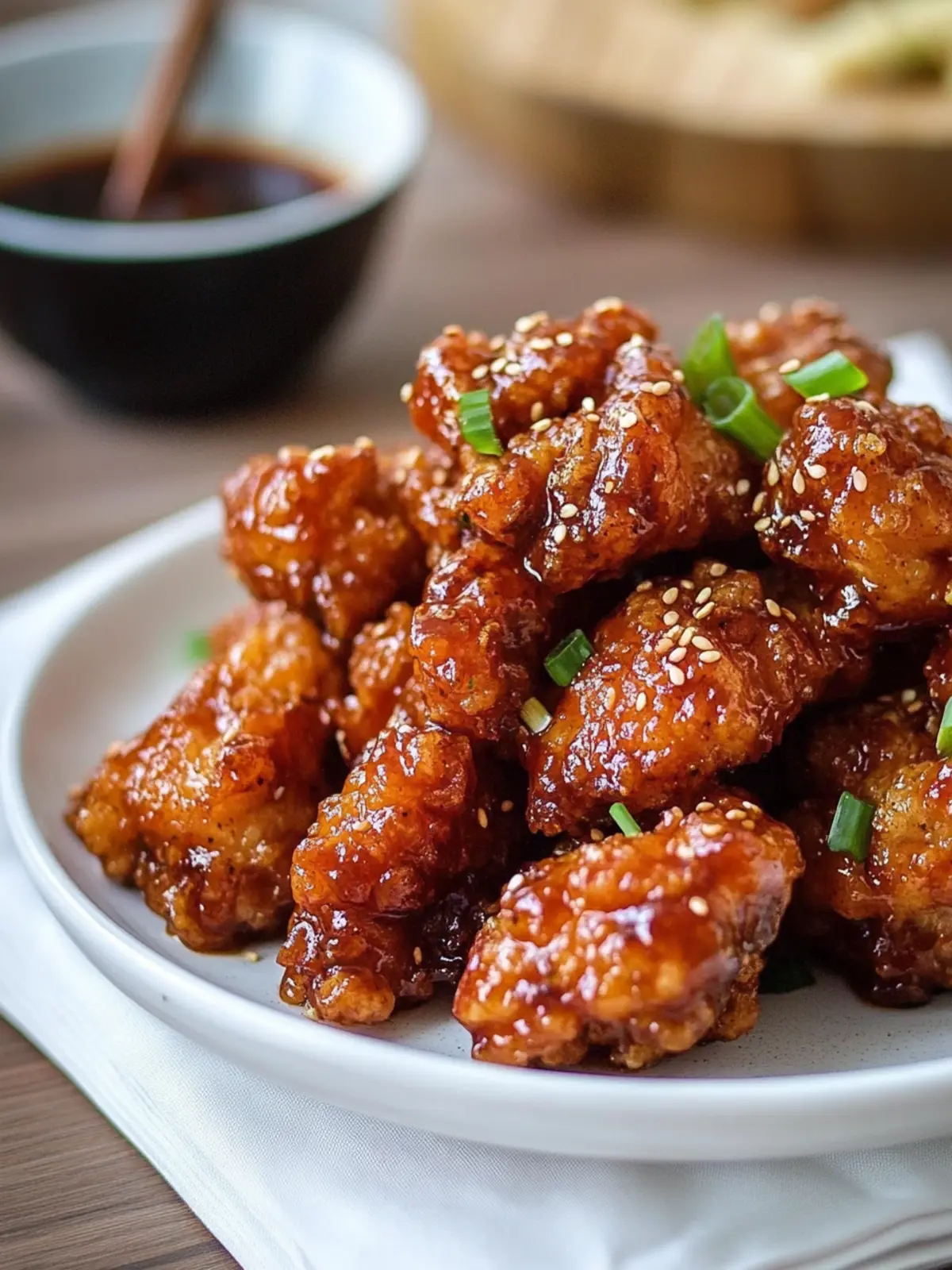
Crispy Crunch: The double frying technique ensures a perfectly crispy exterior, giving you that satisfying crunch with every bite.
Sweet and Spicy: The delightful blend of gochujang and honey provides a mouthwatering balance of flavors that will excite your taste buds.
Quick Snack: Ideal for those busy days, this recipe comes together in no time, making it perfect for a last-minute treat.
Versatile Choices: Whether you prefer chicken thighs, wings, or even tofu, this recipe adapts effortlessly to your protein of choice.
Crowd Pleasure: Serve it at gatherings and watch your friends and family dive into the irresistible sticky sweetness of this Korean classic.
Elevate your cooking game with this easy and delicious dish that rivals any restaurant version.
Dakgangjeong Ingredients
For the Chicken
Boneless Skinless Chicken Thigh and/or Breast Main protein source that provides tenderness; substitute with chicken wings if preferred.
Milk Optional, used for marinating chicken to enhance tenderness and flavor; could be omitted.
Salt Essential for flavor enhancement; don t skip this step!
Pepper Adds mild heat; use fresh ground for best results.
For the Marinade
Minced Garlic Adds aromatic depth; fresh garlic preferred over pre-minced for superior taste.
Minced Ginger Provides warmth and a slight sweetness; fresh is recommended for the best flavor.
Rice Wine Contributes depth of flavor; can substitute with dry sherry if unavailable.
For the Coating
Potato Starch Creates a light, crispy crust; corn starch may be used as a substitute if needed.
Oil for Deep Frying Essential for frying; use oils with a high smoke point like canola or vegetable oil.
For the Sauce
Soy Sauce Adds umami flavor to the sauce for that irresistible taste; don t forget this ingredient!
Cooking Rice Wine (Mirim/Matsul) Enhances sauce flavor; can substitute with clear vinegar.
Apple Cider Vinegar/Rice Vinegar Provides acidity to balance the sweetness of the sauce perfectly.
Gochujang (Korean Red Chili Pepper Paste) Main flavor component for sweetness with heat; adjust amount based on spice preference.
Honey/Oligo Syrup/Rice Syrup/Corn Syrup Sweetener for the sauce; adjust the quantity based on your sweetness preference.
Sesame Oil Adds a nutty aroma; essential for authenticity and flavor richness.
Brown Sugar Adds complexity to sweetness; can substitute with white sugar if needed.
For Garnishing
Coarsely Chopped Peanuts or Seeds Optional garnish for added crunch and texture; provides a satisfying finish to the dish.
Gather these ingredients, and you’re on your way to making delicious dakgangjeong! Happy cooking!
How to Make Dakgangjeong
Prep the Chicken: Cut your boneless chicken thighs into bite-sized pieces. If you’re using milk for marination, soak the chicken in it for about 30 minutes to enhance tenderness.
Marinate: Drain the chicken from the milk and combine it with salt, pepper, minced garlic, minced ginger, and rice wine. Let this marinate for 20-30 minutes to infuse flavor.
Make the Sauce: In a saucepan, combine all the sauce ingredients: soy sauce, cooking rice wine, apple cider vinegar, gochujang, honey, sesame oil, and brown sugar. Bring to a boil, then simmer until slightly thickened, about 3-4 minutes.
Coat the Chicken: Take the marinated chicken pieces and coat each one evenly with potato starch. This will help create that coveted crispy exterior.
Heat the Oil: In a narrow pot, heat the oil to 330°F. This temperature is crucial for achieving that perfect fried texture aim for light golden brown!
Fry the Chicken: Working in batches, carefully add the coated chicken pieces to the hot oil. Fry them for about 3 minutes until they start to become light golden brown, then remove and drain on a wire rack or paper towel.
Double Fry for Crunch: Reheat the oil, then double fry the chicken pieces for an additional 1-2 minutes until they turn golden brown and extra crispy.
Toss in Sauce: Finally, heat the sauce again and toss the fried chicken in it until each piece is well-coated with that glossy, sticky goodness.
Optional: Garnish with coarsely chopped peanuts or seeds for extra crunch and flavor.
Exact quantities are listed in the recipe card below.
Dakgangjeong Variations & Substitutions
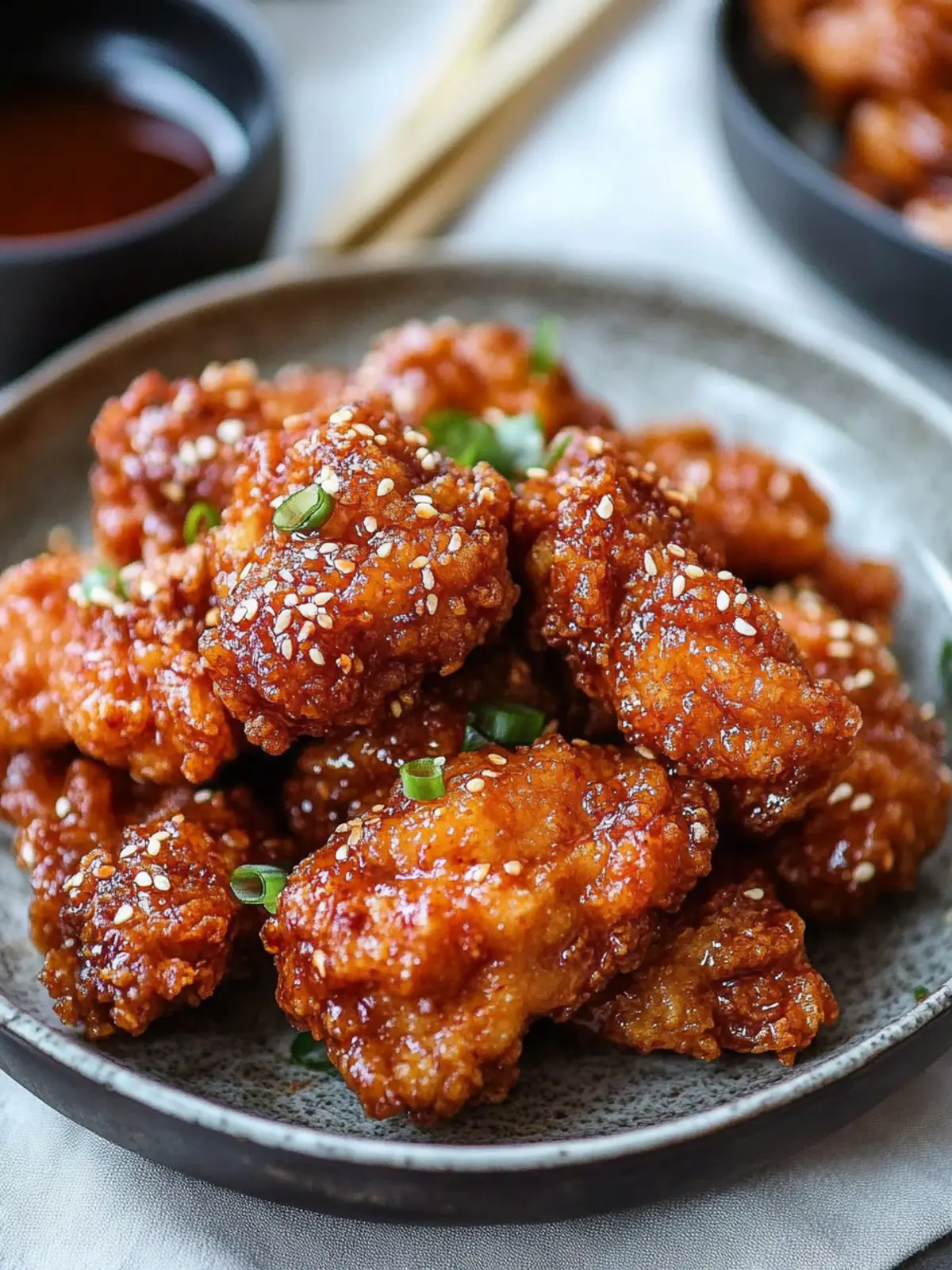
Feel free to make this delicious dish your own with a few simple changes that can elevate the taste and meet your dietary preferences!
- Chicken Wings: Swap boneless thighs for crispy chicken wings for a fun, finger-licking option.
- Tofu Option: For a vegetarian twist, substitute the chicken with firm tofu; press it to remove excess moisture for a better cook.
- Honey-Free: Replace honey with maple syrup or agave for a vegan-friendly sauce without losing sweetness.
- Spicy Kick: Increase the heat by adding more gochugaru or experimenting with fresh chopped chilies in the sauce.
- Gluten-Free: Use gluten-free soy sauce and substitute potato starch with tapioca flour to keep it crisp and safe for gluten intolerances.
- Sweet Substitute: If you prefer less sugar, try using coconut sugar or a natural sweetener like stevia for a healthier take.
- Sauce Variations: Swap gochujang for a sweet chili sauce if you desire a milder, sweeter flavor profile without the heat.
- Nut-Free: Omit peanuts in the garnishing step or replace them with seeds like sunflower or pumpkin, ensuring the dish remains allergen-friendly.
Experiment with these variations to discover your favorite twist on this irresistible classic!
Make Ahead Options
These Dakgangjeong (Sweet Crispy Korean Fried Chicken) are perfect for meal prep enthusiasts! You can marinate the chicken pieces up to 24 hours in advance, allowing the flavors to really penetrate and enhance the final dish. Additionally, you can prepare the sauce ahead of time and refrigerate it for up to 3 days. Just remember to keep the fried chicken separate from the sauce until you’re ready to serve to maintain crispiness. When you re ready to enjoy, simply reheat the chicken in the oven to retain its crunch and toss it in the warmed sauce. This way, you ll have delicious, restaurant-quality Dakgangjeong on the table with minimal last-minute effort!
Expert Tips for Dakgangjeong
Keep Oil Hot: Ensure your oil reaches 330°F before frying to avoid greasy chicken. A thermometer is your best friend here!
Batch Frying: Avoid overcrowding the pan. Fry chicken in batches to achieve even cooking and that signature crispiness in your dakgangjeong.
Double Fry Magic: For extra crunch, do not skip the double frying step. It s the secret to getting that perfect texture everyone loves!
Spice Control: Adjust the heat in your sauce by modifying the amount of gochujang or adding gochugaru (chili flakes) according to your preference.
Marination Matters: Allow the chicken to marinate adequately. The flavors meld beautifully, enhancing the overall taste of your dakgangjeong.
How to Store and Freeze Dakgangjeong
Fridge: Store leftover dakgangjeong in an airtight container in the fridge for up to 3 days. This keeps the flavors intact while maintaining some crunch.
Freezer: For longer storage, freeze the chicken pieces before coating them in sauce. They’ll last up to 2 months. When ready to enjoy, simply reheat and toss them in your sauce!
Reheating: Reheat leftover dakgangjeong in the oven at 350°F for about 10-15 minutes to restore crispiness. Avoid microwaving, as this can make the coating soggy.
Make-Ahead: Prepare the chicken and sauce ahead of time, and store them separately. Assemble and fry right before serving for the best experience with your sweet crispy Korean fried chicken!
What to Serve with Dakgangjeong?
Discover the perfect accompaniments to amplify the deliciousness of your crispy Korean fried chicken experience.
- Cold Beer: A classic ChiMaek pairing, the refreshing taste of a cold beer perfectly balances the sweet and spicy flavors of Dakgangjeong.
- Pickled Radishes: These tangy bites provide a fresh contrast, cutting through the richness and enhancing every mouthful of chicken.
- Steamed Rice: A soft and fluffy rice base soaks up any excess sauce while complementing the bold flavors of your Dakgangjeong beautifully.
- Korean Slaw: A vibrant mix of cabbage, carrots, and sesame seeds offers crunch and a burst of freshness, making it a delightful side.
- Spicy Kimchi: This fermented favorite adds depth and spice, elevating the authenticity of your meal while providing a probiotic boost.
- Chilled Soju: Servicing your Dakgangjeong with a glass of chilled soju can take your meal to the next level smooth and slightly sweet, it’s the ideal smooth drink.
- Fruit Salad: A refreshing fruit medley with melons and berries adds a sweet, juicy contrast to the savory chicken, making your meal lighter and brighter.
Each pairing brings its unique flavor and texture, making your Dakgangjeong feast a vibrant celebration of taste!
Dakgangjeong (Sweet Crispy Korean Fried Chicken) Recipe FAQs
What type of chicken is best for Dakgangjeong?
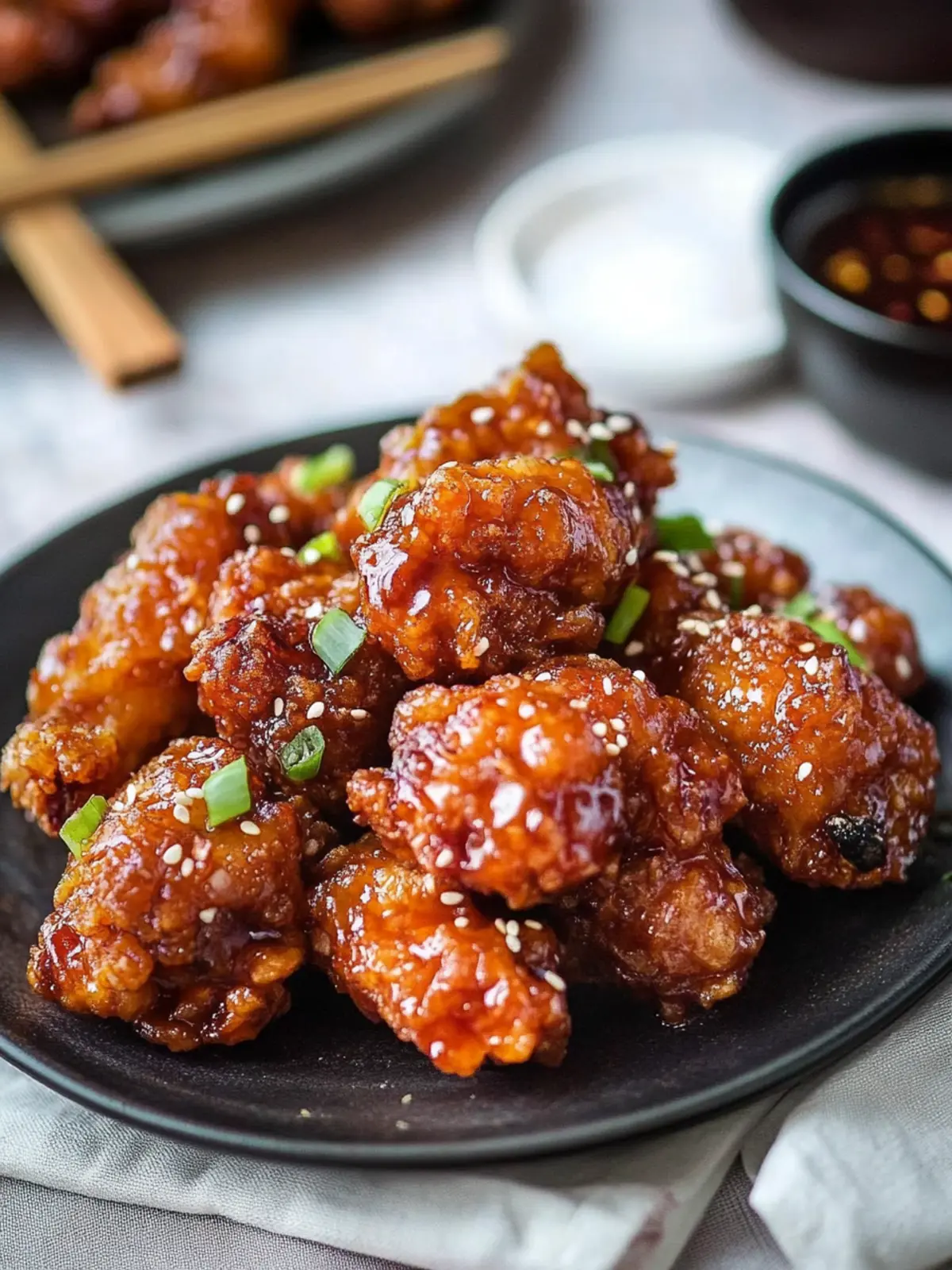
Absolutely! I recommend using boneless skinless chicken thighs for their tenderness and flavor. However, you can also use chicken wings or breast meat if you prefer. Each type will offer a slightly different texture and taste!
How do I store leftovers?
Very simply! Store any leftover dakgangjeong in an airtight container in the fridge for up to 3 days. To retain as much crispiness as possible, reheat them in the oven at 350°F for about 10-15 minutes. This method will help revive their delicious crunch!
Can I freeze Dakgangjeong?
Yes, you can! To freeze dakgangjeong, I suggest frying the chicken pieces first, then letting them cool completely. Place the fried chicken in an airtight container or freezer bag, and they’ll stay good for up to 2 months. When you re ready to enjoy, simply reheat them in the oven until hot and crispy, then toss in the sauce. Yum!
What should I do if my chicken isn t crispy?
If your dakgangjeong isn t achieving that coveted crispiness, it might be due to oil temperature. Ensure your oil is heated to 330°F before frying. Using potato starch is also important as it creates that light, crispy coating. Don t forget that double frying step it really makes a difference!
Are there any dietary considerations I should keep in mind?
Absolutely! If you’re cooking for someone with allergies, be mindful of ingredients like soy sauce and sesame oil, as they can trigger reactions. For gluten-free options, substitute regular soy sauce with tamari and ensure your starches are also gluten-free. And for pets, it s best to avoid sharing this dish as onions, garlic, and other seasonings may not be safe for them.
How spicy is Dakgangjeong?
The spice level primarily depends on the amount of gochujang you use in the sauce. For a milder version, start with a small amount and gradually increase according to your taste preference. Don t hesitate to omit the gochujang if you re looking for a completely mild flavor. The beauty of dakgangjeong is in its versatility!