
Savor Korean Beef Stew with Gochujang for Ultimate Comfort
Last Updated on May 8, 2026 by rodrigorecipez
The fleeting chill of autumn evenings has me reaching for something warm and soulful, like this Korean Beef Stew with Gochujang. Just the thought of it brings a smile to my face, evoking memories of comforting family dinners where laughter mingled with the enticing aroma of spices dancing through the air. The magic in this dish lies not only in its deep, savory flavors but also in how effortlessly it transforms everyday ingredients into something extraordinary.
With a harmonious blend of tender beef chuck, garlic, and rich gochujang, this stew offers the perfect antidote to the mundane fast food routine that can sneak into our lives. Plus, the preparation is refreshingly simple allowing you to savor the anticipation as it braises gently, melding all those delightful flavors into one irresistible pot. Whether you re unwinding after a long day or gathering with friends for a comforting meal, this recipe promises to impress and satisfy. Join me on this culinary adventure, and let s create a cozy masterpiece that tastes as incredible as it feels!
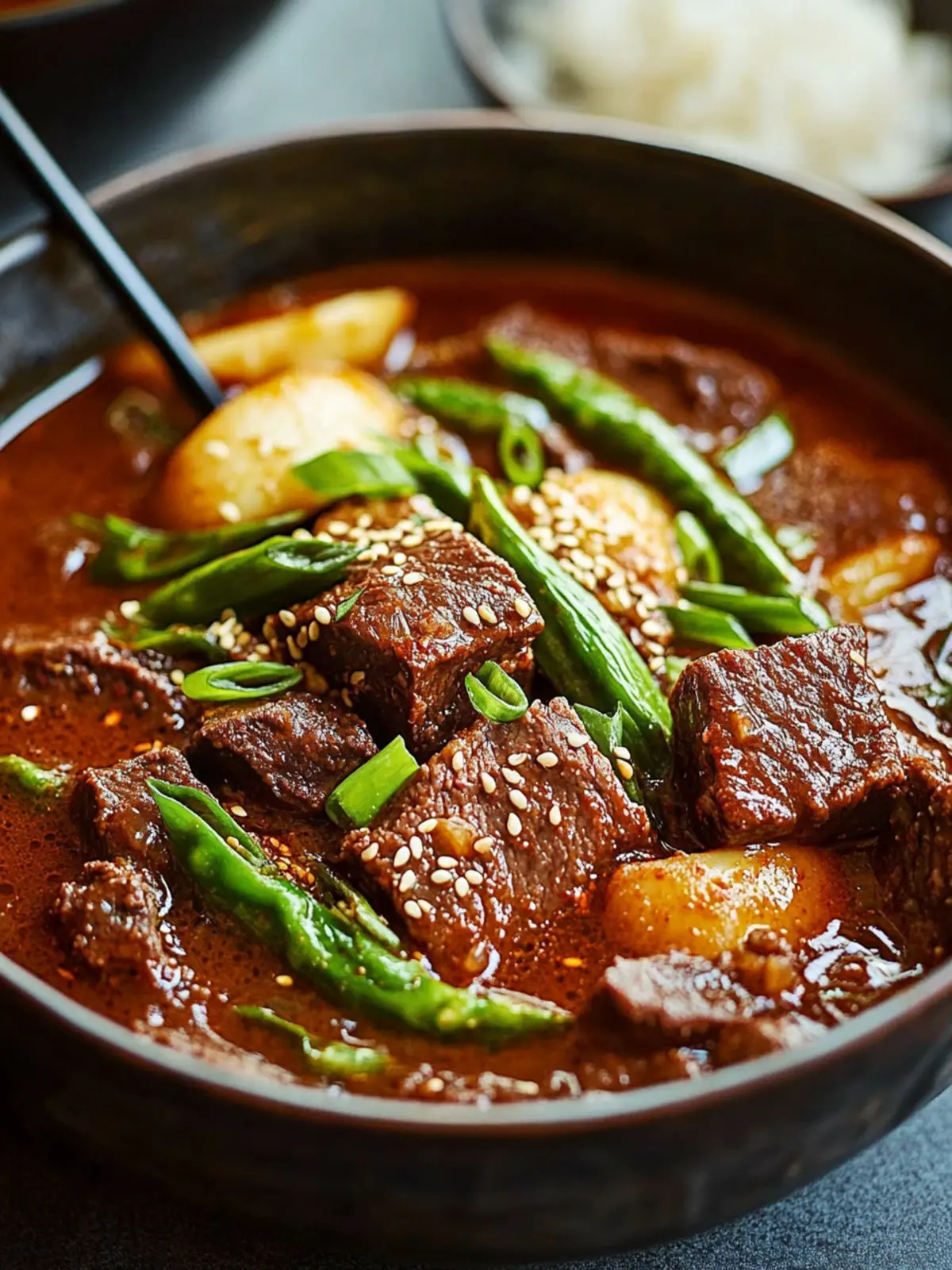
Why is Korean Beef Stew with Gochujang a Must-Try?
Simplicity at its core: This recipe features a straightforward marination process and one-pot preparation, perfect for busy home cooks.
Umami-packed flavor: The combination of gochujang and miso enriches the stew with layers of savory goodness that will warm your soul.
Versatile delights: Enjoy it over rice, with crusty bread, or simply on its own, adapting to your mood or dietary preferences.
Crowd-pleaser: Impress family and friends with this comforting dish its rich aroma and taste make it a go-to for gatherings.
Ready for more comforting recipes? Check out more easy homestyle meals that will elevate your mealtime!
Ingredients for Korean Beef Stew with Gochujang
For the Beef
3 lb beef chuck cut into large pieces for optimal tenderness and flavor.
For the Marinade
¼ cup soy sauce adds depth and umami to the beef, enhancing the overall taste.
¼ cup shiro miso known for its subtle sweetness, it complements the soy sauce beautifully.
For the Aromatics
10 cloves garlic infuses the stew with a rich, fragrant aroma that s simply irresistible.
For the Broth
3 cups water serves as the base to bring all the wonderful flavors together.
1 tsp hon-dashi a Japanese soup stock that adds another layer of umami goodness.
For the Spice
2 Tbsp gochujang this Korean chili paste gives the stew its signature heat and depth, making it a must-try!
1 Tbsp gochugaru provides a smoky flavor and beautiful red color, making this stew visually appealing.
Feel the warmth and joy as you gather these ingredients for your Korean Beef Stew with Gochujang, and let’s embark on a delicious cooking journey together!
How to Make Korean Beef Stew with Gochujang
Mix the soy sauce and shiro miso together in a bowl until it forms a smooth paste. Coat the beef chunks thoroughly in this mixture, cover, and refrigerate for at least 4 hours, or up to 12 for maximum flavor.
Preheat your oven to 325°F (163°C) while waiting for the beef to marinate; this ensures a warm cooking environment for your stew.
Heat a thin layer of vegetable oil in a large pot or Dutch oven over medium-low heat. Brown the marinated beef in small batches, ensuring each piece is golden brown, then remove and set aside.
Sauté the garlic and gochugaru in the same pot for about 1-2 minutes until aromatic; this step builds a fragrant base for your stew.
Prepare the broth by adding hon-dashi to 3 cups of water in the pot. Bring it to a gentle boil, allowing all the flavors to meld beautifully.
Dissolve the gochujang in a spoonful or two of hot dashi until smooth. Then, stir this back into the pot, enhancing the stew’s rich flavor profile.
Return the browned beef to the pot and pour in the remaining broth. Stir everything well, cover the pot, and transfer it to the oven for braising.
Braise the stew until the beef becomes fork-tender, allowing approximately 2-3 hours for the flavors to meld into a comforting, rich stew.
Optional: Serve with fresh cilantro for a vibrant garnish.
Exact quantities are listed in the recipe card below.
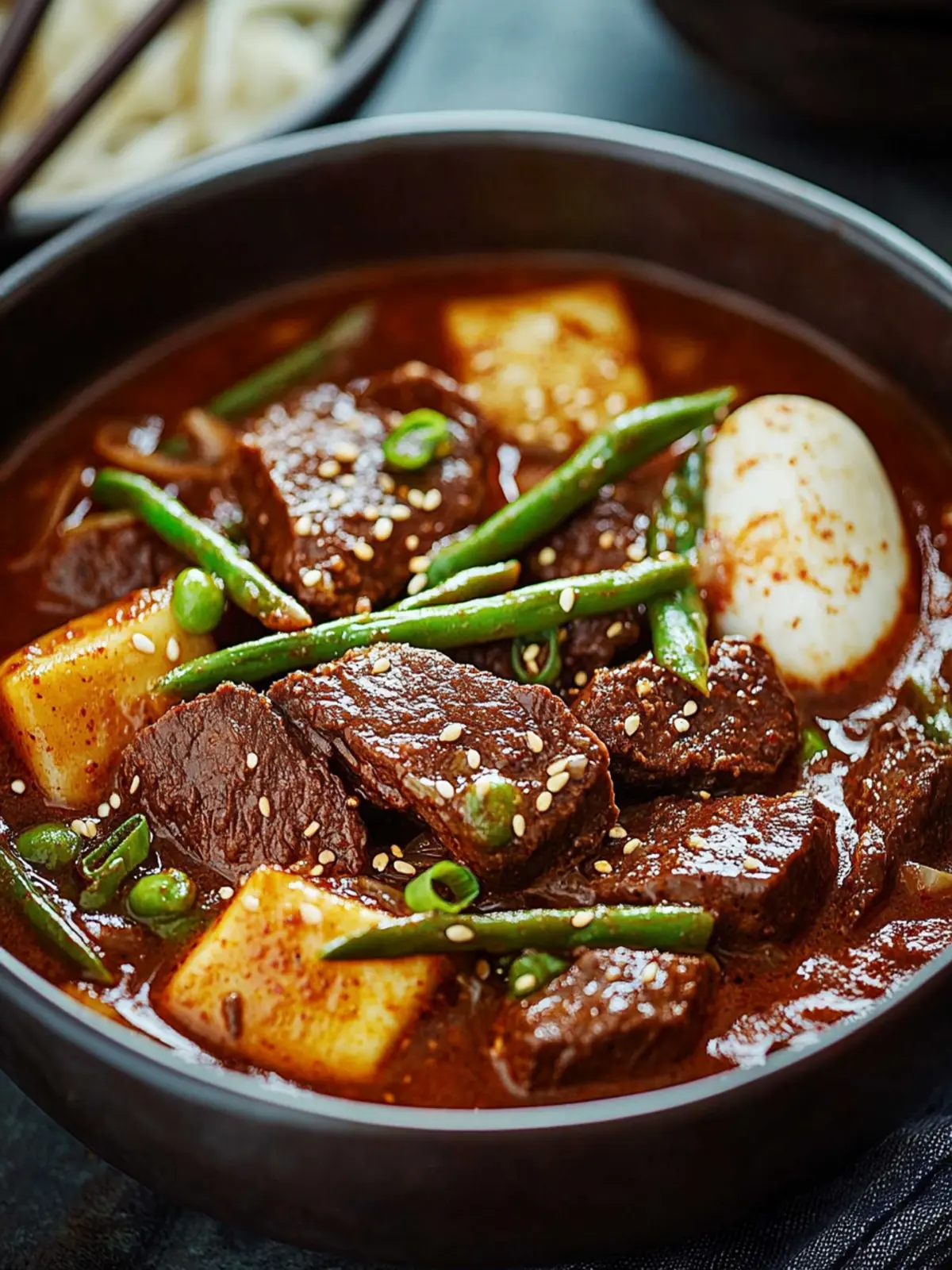
What to Serve with Korean Beef Stew with Gochujang?
The warmth of this hearty stew opens up a world of perfect pairings that enhance your dining experience.
Steamed Jasmine Rice:
Light and fluffy, it captures the rich broth and complements the savory depth of the stew beautifully.Crusty French Bread:
Ideal for soaking up every drop of the flavorful broth, this bread adds a satisfying crunch and warmth.Pickled Vegetables:
Their tangy crunch balances the stew’s richness, brightening each bite and offering a refreshing contrast.Spicy Kimchi:
This fermented side dish adds a kick of flavor, deepening the umami experience while introducing lively texture.Garlic Mashed Potatoes:
Creamy and buttery, they serve as a silky base under the stew, enhancing its bold flavors without overwhelming them.Honey Glazed Carrots:
Sweet and tender, these carrots create a delightful harmony with the stew, providing a fresh pop of color and taste.Asian Slaw:
Crisp and dressed in a light sesame vinaigrette, this salad gives a refreshing contrast to the stew s rich, warming qualities.Chilled Soju or Sake:
These traditional Korean drinks emphasize the stew’s flavors while providing a smooth, enjoyable sipping experience to accompany your meal.
Each pairing brings out unique notes in the Korean Beef Stew with Gochujang, making your dinner a truly memorable occasion!
Make Ahead Options
These Korean Beef Stew with Gochujang are perfect for meal prep enthusiasts! You can marinate the beef chunks by mixing the soy sauce and shiro miso up to 12 hours in advance; this not only saves time but also allows the flavors to deepen. Additionally, you can brown the beef and prepare the aromatic base (sautéing garlic and gochugaru) up to 24 hours ahead just refrigerate these components in separate airtight containers. When you re ready to enjoy your stew, simply combine everything in your pot and resume cooking as directed. This approach ensures your stew is just as delicious while saving precious time on busy weeknights!
Expert Tips for Korean Beef Stew
Marination Time: Allow the beef to marinate for a minimum of 4 hours, or even better, overnight. This deepens the flavor and enhances the overall taste of your Korean Beef Stew with Gochujang.
Browning Technique: Brown the beef in small batches instead of overcrowding the pot. This ensures a good sear, locking in flavors and achieving that rich color.
Low and Slow: Braise the stew at a low temperature in the oven to achieve fork-tender beef. Rushing this step can lead to tougher meat and less flavor integration.
Taste as You Go: Always taste your broth before serving. You can adjust the seasoning by adding more gochujang or gochugaru, depending on your heat preference.
Resting Time: After cooking, let your stew sit for a few minutes before serving. This allows flavors to settle and meld, creating an even richer stew experience.
Storage Tips: Store leftovers in an airtight container. The flavors deepen even more overnight, making the next-day experience just as delightful!
Variations & Substitutions for Korean Beef Stew with Gochujang
Feel free to explore these delicious twists and swaps that personalize your stew experience!
- Dairy-Free: Substitute miso with a gluten-free soy sauce for an allergy-friendly version while maintaining flavor depth.
- Vegetable Delight: Add diced carrots and potatoes for extra nutrition and texture, making this stew heartier.
- Spicy Boost: Increase the gochujang or sprinkle in some red pepper flakes for those who crave extra heat in every bite.
- Low-Sodium: Opt for low-sodium soy sauce and miso to minimize salt, perfect for heart-conscious diners.
- Herby Freshness: Toss in a handful of spinach or kale just before serving for a pop of color and nutritious goodness.
- Protein Choices: For a twist, swap beef chuck with chicken thighs or tofu, cooking until tender for a lighter dish.
- Umami Enhancement: Include mushrooms, like shiitake or cremini, during the sauté stage for a burst of additional umami flavor.
- Sweetness Factor: Add a drizzle of honey or maple syrup for a touch of sweet balance against the savory and spicy notes.
Explore these variations to elevate your cooking adventure and create a unique stew that’s uniquely yours!
Storage Tips for Korean Beef Stew with Gochujang
Fridge: Store your leftover stew in an airtight container for up to 3 days. This keeps the flavors fresh and delicious for your next meal.
Freezer: For longer storage, freeze the stew in freezer-safe containers for up to 3 months. Thaw it overnight in the fridge before reheating.
Reheating: When ready to enjoy again, heat the thawed stew on the stove over medium heat until warmed through, or in the microwave in short intervals, stirring in between.
Flavor Development: Don t be surprised if your Korean Beef Stew with Gochujang tastes even better the next day allowing the ingredients to meld overnight adds depth to this cozy dish!
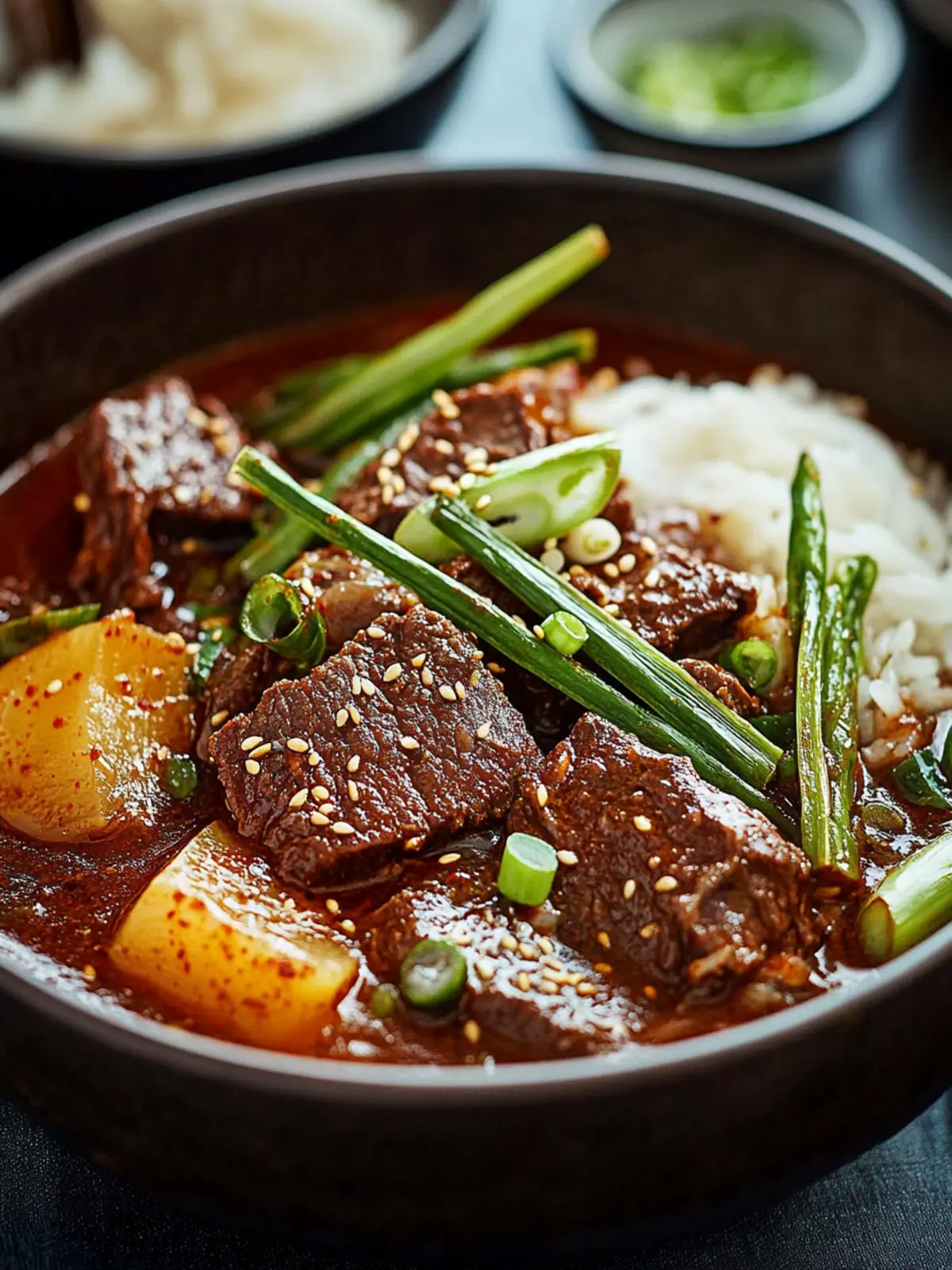
Korean Beef Stew with Gochujang Recipe FAQs
How do I choose the right beef chuck for this recipe?
Absolutely! Look for beef chuck that has a good amount of marbling these little flecks of fat melt during cooking and keep the meat tender and juicy. A bright red color and firm texture are also indicators of freshness. Avoid any cuts with dark spots or a slimy texture, as these can signal aging meat.
How should I store leftover Korean Beef Stew with Gochujang?
Store your leftover stew in an airtight container in the refrigerator for up to 3 days. Make sure it s cooled to room temperature before sealing to prevent condensation. This way, you ll maintain the delightful flavors for your next meal!
Can I freeze Korean Beef Stew with Gochujang?
Very! To freeze, allow the stew to cool completely, then ladle it into freezer-safe containers, leaving some space at the top for expansion. You can freeze it for up to 3 months. When you’re ready to enjoy it again, simply thaw it overnight in the refrigerator and reheat on the stove until warmed through.
What if my stew comes out too salty or spicy?
No worries! If your stew is on the saltier side, trying adding a small potato or some diced carrots to absorb some of that excess salt while simmering just a little longer. To tone down the spice, add a splash of coconut milk or cream; this will smooth out the heat and balance the flavors wonderfully.
Is this dish safe for pets or those with allergies?
I often make this stew with love, but it’s important to note that garlic and certain spices can be harmful to pets. If your furry friends might sneak a bite, it s best to keep this dish away from them. Additionally, check for any allergies to soy or miso in family members before serving. Always prioritize safety when it comes to food!
How can I adapt this recipe for a healthier option?
You can absolutely make this stew lighter! Consider using leaner cuts of beef, like sirloin, or reducing the amount of gochujang to tone down the heat. To increase nutrient content, add more vegetables, such as carrots, potatoes, or bell peppers. This not only makes the stew heartier but also adds layers of flavor. Enjoy cooking!