Pineapple Cauliflower: A Sweet Savory Delight You’ll Love
Last Updated on May 8, 2026 by rodrigorecipez
Have you ever thought about how a simple vegetable can be transformed into a culinary masterpiece? As I was experimenting in the kitchen one afternoon, I stumbled upon the delightful combination of pineapple and cauliflower. This unexpected pairing led to a fresh and vibrant dish that not only satisfies my cravings for homemade food but also adds a burst of flavor that even my fast-food-loving friends appreciate.
Imagine tender cauliflower florets, perfectly roasted to golden perfection, then generously drizzled with a sweet and tangy pineapple sauce. Whether enjoyed hot straight from the oven or as a zesty cold dish, this Pineapple Cauliflower recipe is sure to shake up your weeknight dinners and impress guests at your next gathering. Plus, it s incredibly easy to make! So grab your apron, and let’s dive into this delicious fusion that s both irresistible and healthy!
Why is Pineapple Cauliflower so special?
Bold flavors: This dish brings together the savory notes of roasted cauliflower with a dazzling pineapple sauce, creating a flavor explosion that tantalizes your taste buds.
Quick and easy: With a total cooking time of just 35-40 minutes, you can whip up this vibrant dish in no time, making it perfect for busy weeknights.
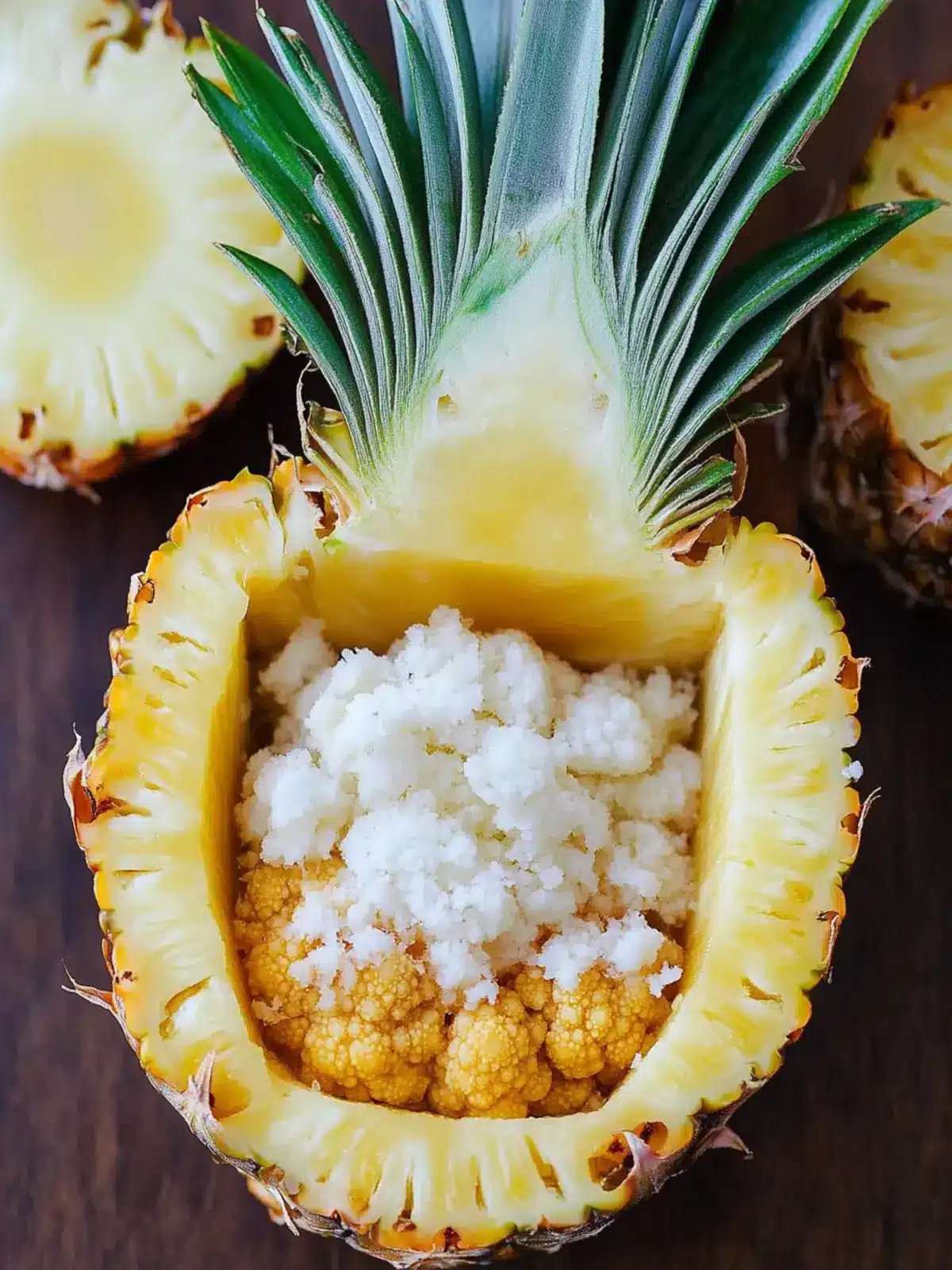
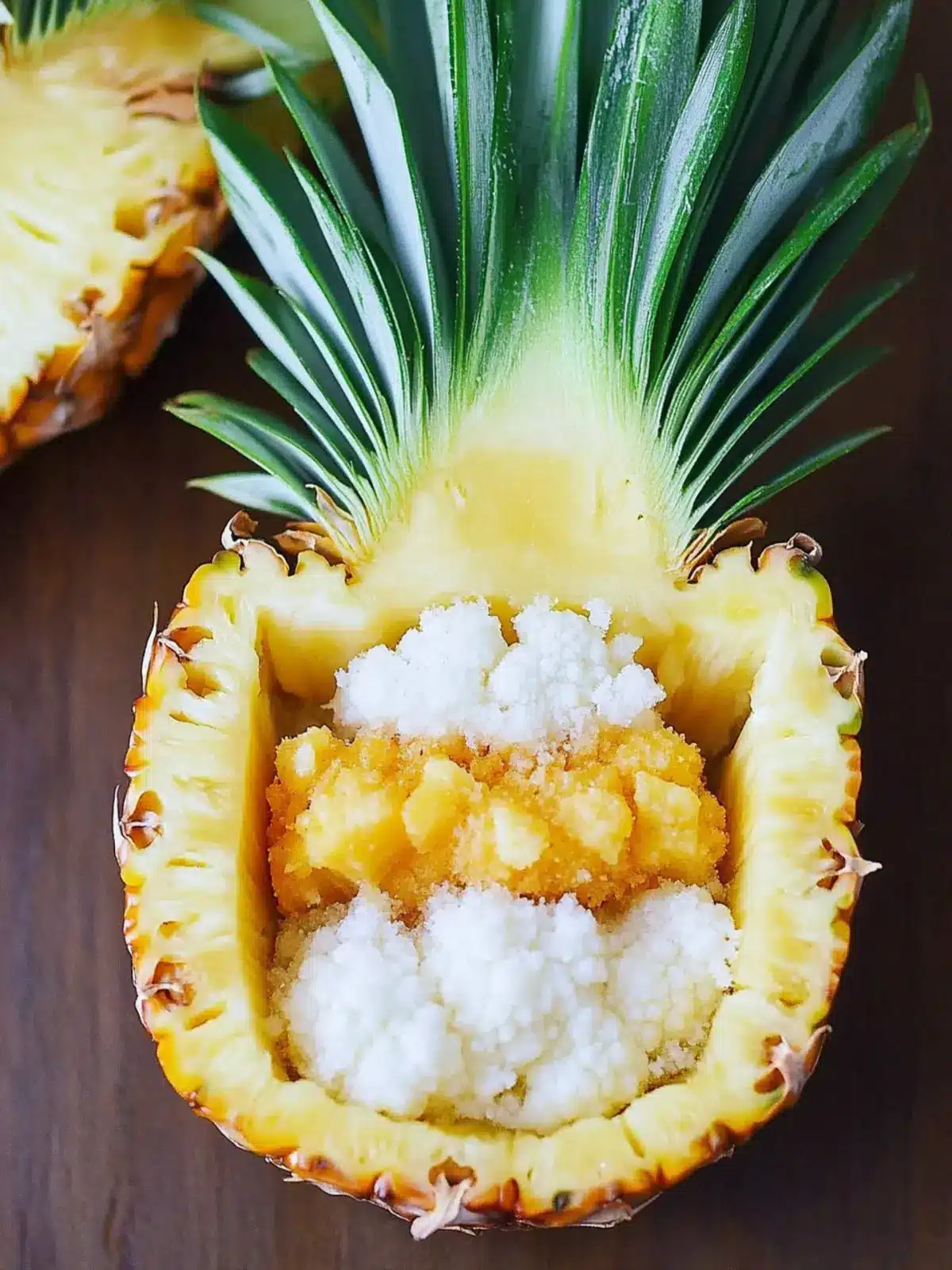
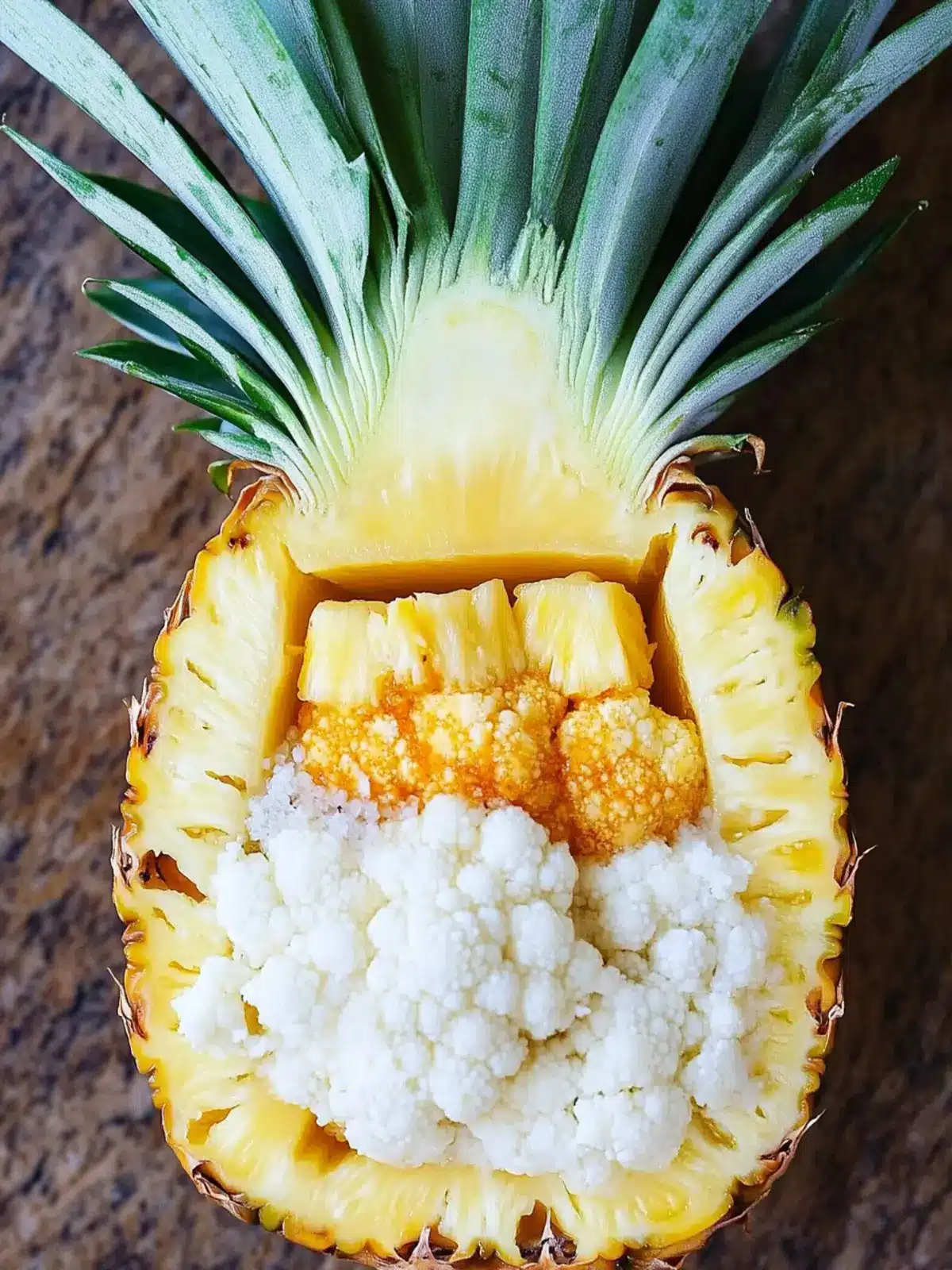
Versatile serving options: Whether you serve it warm or cold, in a pineapple boat or alongside your favorite protein, this recipe adapts beautifully to any occasion.
Healthy twist: Packed with nutrients, this dish is a fantastic alternative to greasy fast food, allowing you to indulge without the guilt.
Crowd pleaser: The unique combination of sweet and savory flavors will leave your guests raving, ensuring it becomes a staple at your gatherings!
Pineapple Cauliflower Ingredients
For the Cauliflower
- Cauliflower chopped into florets, roasting enhances its natural sweetness.
- Milk of choice adds moisture; use almond or oat milk for a dairy-free option.
- Fine cornmeal or flour aids in creating a crispy texture; substitute with almond flour for a gluten-free option.
- Oil or fat-free spray (or agave) helps to coat the cauliflower evenly; agave adds a hint of sweetness.
- Salt enhances the flavors; don’t skip this for a well-seasoned dish.
- Fine breadcrumbs (optional) for an extra crunchy topping; use panko bread crumbs for added texture.
For the Pineapple Sauce
- Pineapple juice the star ingredient for that sweet tang; fresh juice intensifies the flavor.
- Apple cider vinegar or white vinegar balances sweetness; apple cider brings a fruity undertone.
- Minced garlic infuses flavor into the sauce; fresh garlic is always best.
- Powdered ginger lends a warm spice; add more for an even bolder taste.
- Salt to taste; it melds the flavors together harmoniously.
- Cornstarch or arrowroot powder thickens the sauce; both are great for a gluten-free option.
For Serving (optional)
- Whole pineapple can be used to make delightful pineapple boats for a beautiful presentation.
- Sesame seeds sprinkle on top for a delightful crunch and added flavor!
This Pineapple Cauliflower recipe not only delights the senses, but it also transforms a humble vegetable into something extraordinary. Enjoy the journey of flavors!
How to Make Pineapple Cauliflower
Preheat the oven to 425°F. This ensures the cauliflower gets that perfect golden brown color during roasting.
Toss cauliflower florets with oil (or spray or agave) in a large mixing bowl. Make sure each piece is coated evenly for maximum flavor.
Combine the mix with milk, cornmeal, salt, and breadcrumbs. The milk adds moisture, while the cornmeal gives that delightful crunch.
Arrange the mixture in a single layer on a parchment-lined baking sheet. This allows for even roasting, ensuring every floret gets crispy.
Bake for 35-40 minutes, or until the cauliflower is tender and golden brown. Keep an eye on them toward the end!
Whisk together pineapple juice, salt, vinegar, garlic, and powdered ginger in a saucepan. This mix will become your vibrant sauce.
Incorporate cornstarch fully, then turn the heat on to medium. Stir to combine and watch for bubbles to form; it ll thicken beautifully.
Stir frequently until the sauce reaches a thick, syrupy consistency. This should take about 3-5 minutes.
Combine the roasted cauliflower with the pineapple sauce, making sure every piece is generously coated in this sweet and tangy goodness.
Serve hot or cold, ideally in pineapple boats topped with sesame seeds for added crunch and visual appeal.
Store leftovers in the refrigerator for up to four days, making for a convenient snack or side dish later on.
Optional: Garnish with fresh herbs for a pop of color and flavor!
Exact quantities are listed in the recipe card below.
Expert Tips for Pineapple Cauliflower
Choose Fresh Cauliflower: Fresh florets have better flavor and texture. Avoid yellowing or bruised cauliflower for the best results.
Proper Coating: Ensure each floret is evenly coated with oil and cornmeal mix; this helps achieve that crispy texture without sogginess.
Monitor Baking Time: Keep an eye on the cauliflower during baking; overcooking can lead to burnt bits while undercooking may result in a mushy texture.
Thicken Sauce Well: Whisk cornstarch in completely before heating; this prevents lumps in your sauce, ensuring a smooth, glossy finish.
Serving Suggestions: Get creative! Serve the Pineapple Cauliflower in pineapple boats for a fun presentation or as a side alongside grilled chicken or fish.
Leftover Storage: Store in airtight containers to keep from drying out; these flavors meld beautifully for a delightful next-day snack!
What to Serve with Pineapple Cauliflower?
Creating a delightful meal around this unique dish can be a wonderful experience filled with vibrant flavors and colorful presentations.
Quinoa Salad: A refreshing mix of quinoa, cucumber, and cherry tomatoes adds a light and nutritious element that pairs beautifully with the sweet tang of pineapple.
Grilled Chicken: Juicy, herb-marinated chicken legs introduce a savory contrast, enhancing the overall flavor profile and ensuring a satisfying balance to your meal.
Steamed Broccoli: Adding steamed broccoli not only contributes a lovely, crunchy texture but also brings a bright green color to your plate, making it visually appealing.
Mango Salsa: The bright acidity of mango salsa livens up the meal, providing another layer of tropical sweetness that complements the pineapple sauce. Try serving it on the side for a refreshing burst!
Brown Rice: A bed of nutty brown rice soaks up the delicious pineapple sauce, offering a wholesome carbohydrate base that s filling and flavorful.
Coconut Water: To round out your meal, sip on chilled coconut water. Its subtle sweetness and hydrating qualities make it a perfect drink to accompany the lively flavors of your dish.
Pineapple Cauliflower Variations
Feel free to put your own spin on this delightful dish and make it uniquely yours!
Dairy-Free: Swap milk with almond milk or coconut milk to accommodate lactose intolerance while keeping it creamy.
Gluten-Free: Use almond flour instead of cornmeal or regular flour for the breading. This gives a nutty taste and keeps it gluten-free.
Spicy Kick: Add a pinch of red pepper flakes to the pineapple sauce for a delightful heat that balances the sweetness.
Herb Infusion: Fresh herbs such as cilantro or basil mixed into the pineapple sauce will elevate the dish with aromatic freshness.
Extra Crunch: Toss in some chopped nuts like cashews or almonds with the cauliflower before baking for a delightful crunch in every bite.
Citrus Zest: Grate some lime or lemon zest into the sauce for an extra zingy brightness that complements the pineapple perfectly.
Vegetable Boost: Mix in other veggies like bell peppers or snap peas with the cauliflower to create a colorful stir-fry that’s vibrant and nutritious.
Fruit Fusion: Add diced fresh mango or peaches into the sauce for a tropical twist that enhances the flavor profile even more.
With these variations, you can explore countless flavors, making every serving of Pineapple Cauliflower a new experience!
Make Ahead Options
These Pineapple Cauliflower bites are perfect for meal prep enthusiasts! You can chop the cauliflower and toss it with oil, salt, milk, and cornmeal up to 24 hours in advance. Simply store it in an airtight container in the refrigerator to keep it fresh. Additionally, the pineapple sauce can be prepared up to 3 days ahead; just mix the pineapple juice, vinegar, garlic, and ginger, whisk in cornstarch, and refrigerate. When you’re ready to serve, roast the prepped cauliflower, combine it with the sauce, and enjoy this delightful dish with minimal effort. Don t worry, the flavors remain just as delicious your busy weeknights just got a whole lot easier!
How to Store and Freeze Pineapple Cauliflower
Fridge: Store leftovers in an airtight container for up to four days. This will keep the flavors intact and prevent drying out.
Freezer: If you want to save more, freeze the Pineapple Cauliflower in a freezer-safe container for up to three months. Thaw overnight in the fridge before reheating.
Reheating: For the best results, reheat in the oven at 350°F for about 15-20 minutes. This will help maintain the crispy texture you love.
Serving: Enjoy it warm, or mix it into salads for a refreshing cold dish. The flavors only get better with time!
Pineapple Cauliflower Recipe FAQs
How do I choose the best cauliflower for this recipe?
Absolutely! When selecting cauliflower, look for heads that are bright white with firm florets. Avoid any with dark spots or yellowing, as these can indicate age or spoilage. Fresh cauliflower should feel heavy for its size, which is a great sign of freshness.
How should I store leftovers of the Pineapple Cauliflower?
Leftovers can be stored in an airtight container in the refrigerator for up to four days. To keep the cauliflower moist and flavorful, avoid exposing it to air, which can lead to drying out. If you plan to store it longer, freezing is a better option.
Can I freeze Pineapple Cauliflower?
Very! To freeze, allow the Pineapple Cauliflower to cool completely after cooking. Then, transfer it to a freezer-safe container or a zip-top bag, ensuring as much air as possible is removed. It can be stored in the freezer for up to three months. When you re ready to enjoy it, thaw it overnight in the fridge and reheat in the oven at 350°F for about 15-20 minutes, ensuring it stays crispy.
What should I do if my cauliflower looks too burnt after baking?
If the cauliflower appears burnt, it might have been roasted for too long or at too high of a temperature. For perfect results, keep an eye on it as it cooks, starting to check around the 30-minute mark. Rotate the baking sheet if necessary for even cooking. If it has burned edges but is fine inside, you can carefully trim away the charred pieces before combining it with the sauce.
Is this recipe suitable for people with nut allergies?
Absolutely! This Pineapple Cauliflower recipe is nut-free, making it a great choice for those with nut allergies. Just be sure to choose dairy-free milk options that are also nut-free, like oat milk or rice milk, to accommodate all dietary needs. Plus, the recipe uses simple ingredients, making it accessible for everyone!
Can I substitute any ingredients in this recipe?
Yes, you can! If you need gluten-free options, you can use almond flour instead of cornmeal or regular flour. For the milk, feel free to choose any plant-based milk that you love, such as coconut or soy milk. Even the pineapple juice can be swapped for any other fruit juice that you’d enjoy! Enjoy the flexibility and find what works best for you!